The Evidence Check
Mechanistic evidence
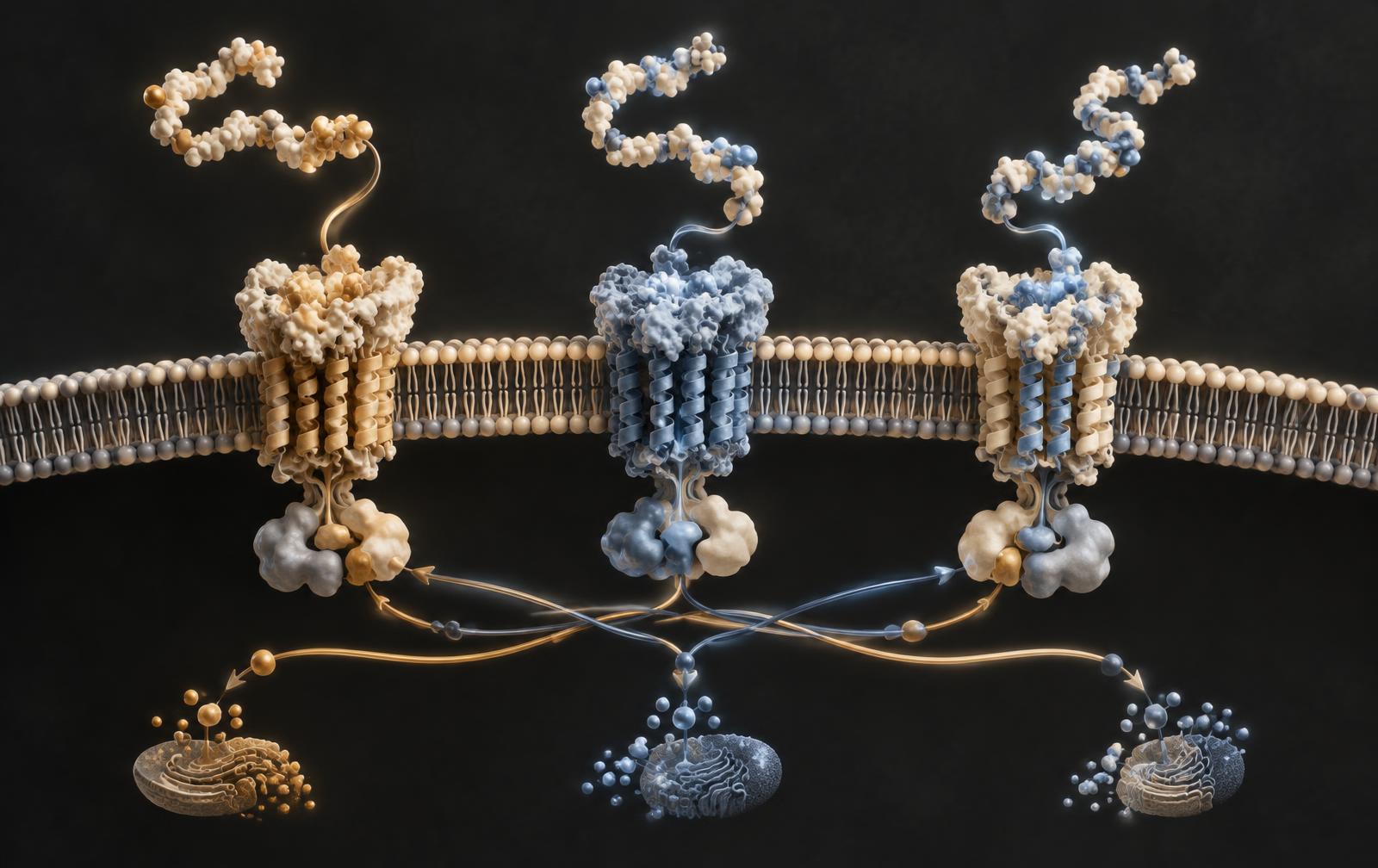
Glucagon helps regulate fasting glucose, hepatic glucose output, lipid metabolism, and broader energy flux.
Animal evidence
Preclinical co-agonist work has explored whether glucagon activity can be paired with incretin effects while managing glucose risk.
Human evidence
Human evidence for glucagon-containing multi-agonists is compound-specific and still developing for investigational drugs.
What remains unknown
The long-term balance of benefit, tolerability, and metabolic trade-offs remains a key research question.
What the Evidence Says
Promising
Glucagon receptor activity may contribute to liver and energy-metabolism effects when balanced with incretin pathways.
Established
Glucagon is a core counter-regulatory hormone, not a simple fat-loss switch.
Unknown
How much glucagon activity is optimal in multi-agonist therapy remains unsettled.
Glucagon is often introduced as insulin's opposite: insulin lowers blood glucose, glucagon raises it. That shorthand is useful for an introductory physiology lecture and incomplete everywhere else. Glucagon is part of a broader fasting and energy-mobilization system that acts heavily through the liver. It influences hepatic glucose production, amino-acid metabolism, lipid handling, and substrate availability during periods when the body is not receiving calories.
So why would researchers add glucagon receptor activity to a metabolic therapy being studied for obesity? The answer is not that glucagon is a 'fat-burning hormone.' That phrase is too blunt for the biology. The better answer is that calibrated glucagon signaling may alter energy expenditure and hepatic metabolism in ways that could complement GLP-1 and GIP receptor activity, especially when appetite and glucose effects are being addressed at the same time.
The problem glucagon creates
Glucagon can raise glucose. That is not a side note; it is central to why the pathway has to be handled carefully. A molecule that only amplified glucagon signaling could worsen glucose control. Multi-agonist research is trying to solve that tension by pairing glucagon activity with incretin activity that supports glucose-dependent insulin secretion and appetite regulation.
The liver is the clue
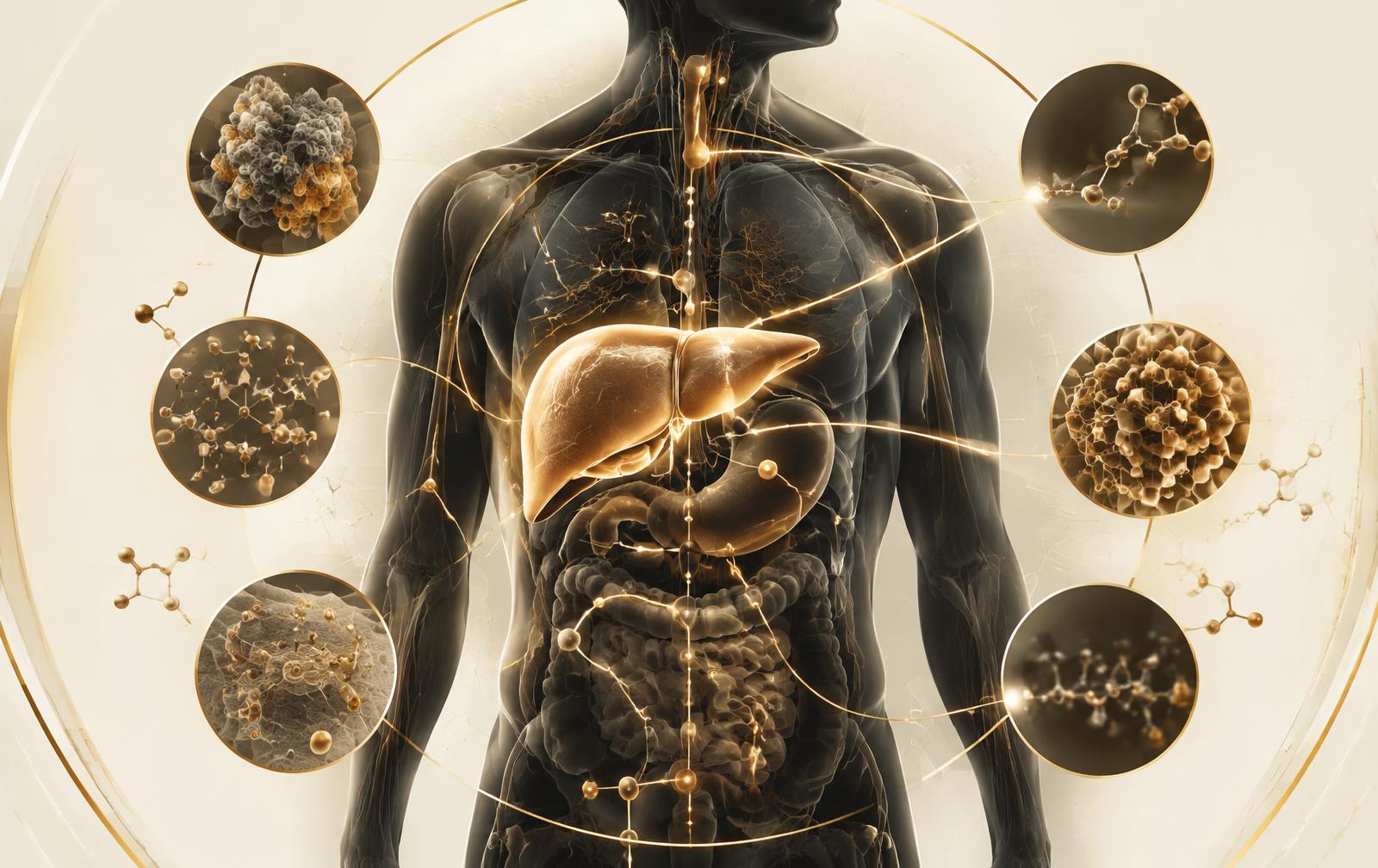
The liver sits at the center of fasting metabolism, triglyceride handling, and metabolic dysfunction-associated steatotic liver disease research. Glucagon receptor biology is relevant because it changes hepatic fuel handling. That is why glucagon-containing co-agonists and tri-agonists are being studied not only for weight but also for broader metabolic and liver endpoints.
Why the target is interesting
In a carefully balanced molecule, glucagon activity may add a metabolic dimension that pure GLP-1 receptor agonism does not fully address. But the word 'may' matters. The question has to be answered in humans, at specific exposures, with clearly measured outcomes and adverse events. It cannot be inferred from hormone lore.
Glucagon is not a marketing adjective. It is a powerful physiological signal.
The responsible way to read glucagon in the retatrutide story is to treat it as the third hypothesis: a potential route to broader energy-metabolism effects, paired with real complexity and the need for long-term data.
Sources & Further Reading
The Half-Life Brief
Research worth reading. No hype.
Get evidence-focused breakdowns of peptide research, metabolic health, longevity, performance and emerging science.
Research summaries, not medical advice. Unsubscribe anytime.
Continue the research
Interested in exploring the research platform?
ORA Wellness Labs provides account-based access to its laboratory research-material platform. Half-Life Optimization is editorially independent; nothing in this article is a recommendation, endorsement, or medical advice.
Related research