The Evidence Check
Mechanistic evidence
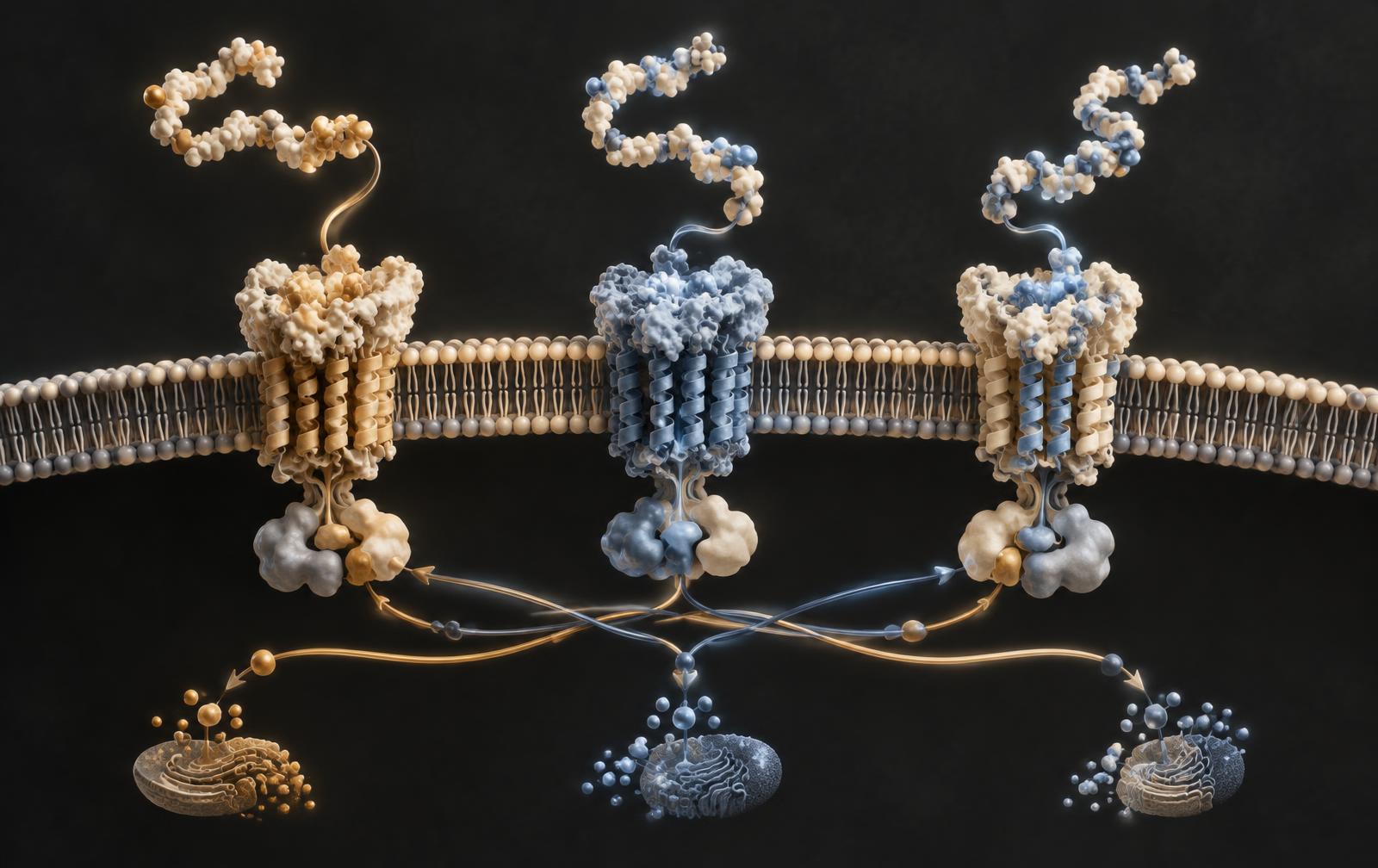
Retatrutide is designed to activate GIP, GLP-1, and glucagon receptors, each involved in energy balance and glucose metabolism.
Animal evidence
Preclinical incretin research supports the plausibility of multi-receptor metabolic strategies, but animal data is not the approval standard.
Human evidence
Published and company-reported clinical data describe weight-loss signals in studied populations, but retatrutide remains investigational and is not FDA-approved.
What remains unknown
Long-term safety, comparative effectiveness, durability, and outcomes beyond weight and metabolic markers remain under study.
What the Evidence Says
Promising
Triple-receptor pharmacology is an ambitious way to test multiple metabolic levers at once.
Established
Retatrutide is investigational; it is not an approved consumer medication.
Unknown
More targets do not automatically mean better results, and long-term outcome data is still developing.
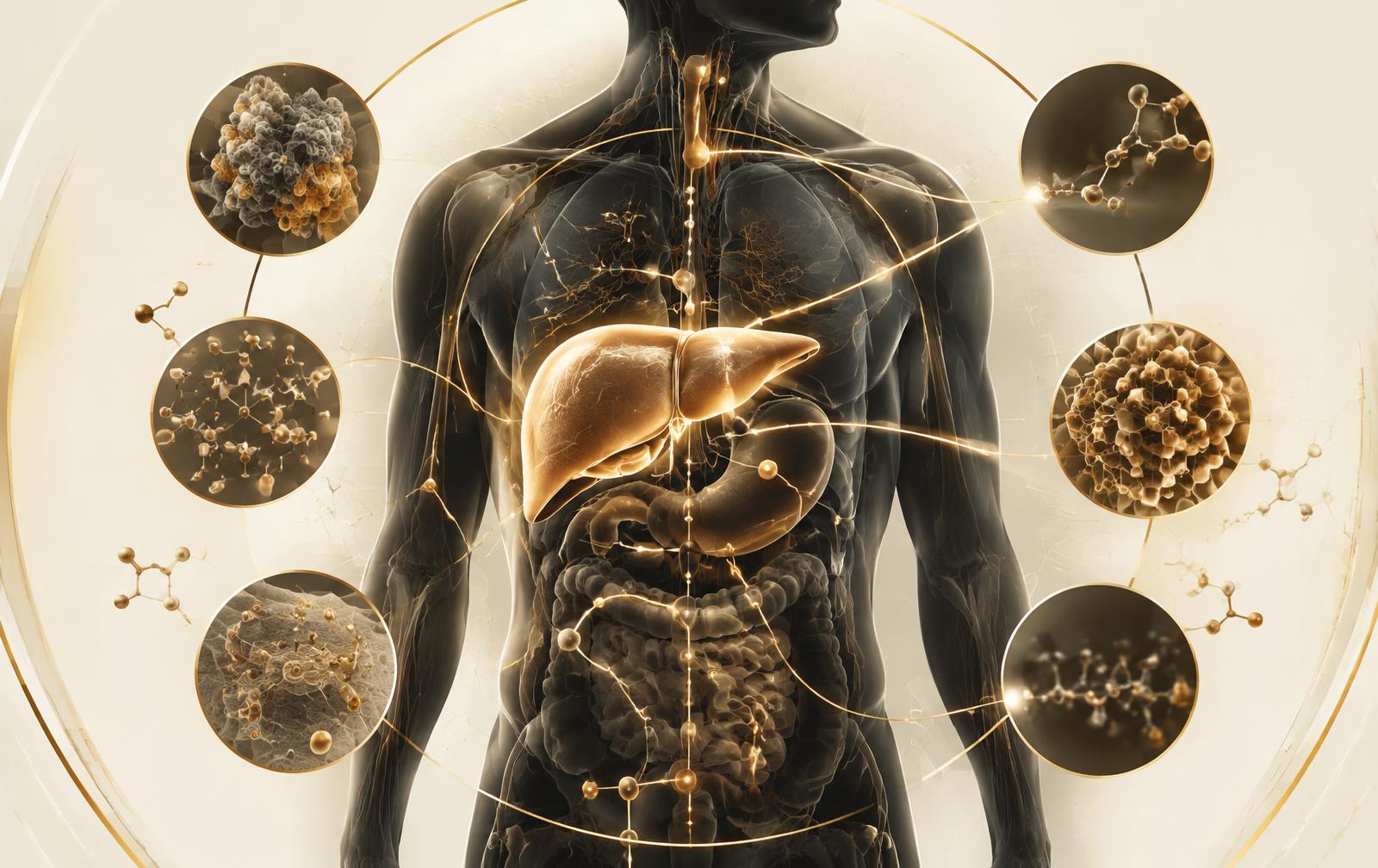
Retatrutide is part of the next wave of incretin-based metabolic research: a peptide designed to activate three receptor systems rather than one. The three systems are GIP, GLP-1, and glucagon. Each participates in energy balance, glucose handling, appetite signaling, or substrate metabolism, and researchers are studying whether coordinated activation can produce clinically meaningful effects in people with obesity, type 2 diabetes, fatty-liver disease, or related cardiometabolic conditions.
The simple version — 'three targets must be stronger than one' — is not the scientific version. Receptor pharmacology is not arithmetic. A compound can engage several pathways and still fail if the balance of activity is wrong, if tolerability limits exposure, if the benefits do not persist, or if long-term outcomes do not justify the risk. Retatrutide is interesting because it tests a clear hypothesis, not because the hypothesis has already been proven.
The three targets
GLP-1 receptor agonism is the best-known part of the incretin story. GLP-1 signaling affects insulin secretion in a glucose-dependent way, slows gastric emptying, and communicates with appetite-regulating circuits. Semaglutide and related drugs made this pathway culturally visible because they produced large, durable weight-loss effects in controlled trials for approved indications.[1]
GIP, or glucose-dependent insulinotropic polypeptide, is more complicated. It is another incretin hormone, and tirzepatide's dual GIP and GLP-1 receptor agonism has made the pathway a major focus of metabolic-drug development. Researchers continue to debate how much of tirzepatide's clinical effect is attributable to GIP activity itself, how much to GLP-1 activity, and how the balance between the two should be understood.[2]
Glucagon is the third target and probably the least intuitive one for a general reader. In ordinary physiology, glucagon helps maintain blood glucose during fasting and participates in hepatic energy metabolism. Adding glucagon receptor activity to a weight-management drug can sound counterintuitive because glucagon can raise glucose, but the research idea is broader: in combination with incretin pathways, calibrated glucagon signaling may influence energy expenditure, liver fat, and metabolic flux. That remains an empirical question, not a slogan.
Where retatrutide stands
Retatrutide is investigational. It is being studied in clinical development, including late-stage programs, but it is not FDA-approved as a consumer medication as of this review. Readers should treat online discussion that presents it as an available therapy or as a settled upgrade over approved medicines as premature.
The available human evidence includes peer-reviewed phase 2 findings and company-reported development updates. Those are important signals, but they are not the same thing as completed regulatory review, real-world pharmacovigilance, or long-term outcomes data across broad populations.[3]
Triple agonism is a research hypothesis. It is not proof that three targets are automatically better than one.
How Half-Life reads it
Retatrutide belongs in the research conversation because it tests a coherent metabolic idea: that appetite, insulin biology, liver metabolism, and energy expenditure can be addressed through a deliberately balanced receptor profile. It does not belong in miracle-language coverage. The right question is not whether it is 'the next big thing.' The right question is what the completed trials show, in which people, against which endpoints, and with what safety profile.
Sources & Further Reading
The Half-Life Brief
Research worth reading. No hype.
Get evidence-focused breakdowns of peptide research, metabolic health, longevity, performance and emerging science.
Research summaries, not medical advice. Unsubscribe anytime.
Continue the research
Interested in exploring the research platform?
ORA Wellness Labs provides account-based access to its laboratory research-material platform. Half-Life Optimization is editorially independent; nothing in this article is a recommendation, endorsement, or medical advice.
Related research