The Evidence Check
Mechanistic evidence
Semaglutide primarily targets GLP-1; tirzepatide targets GIP and GLP-1; retatrutide is designed around GIP, GLP-1, and glucagon receptors.
Animal evidence
Animal and translational models help explain why multi-agonists are plausible but cannot settle clinical rankings.
Human evidence
Human trial programs exist for semaglutide and tirzepatide in approved indications; retatrutide remains investigational.
What remains unknown
Direct comparisons are difficult without head-to-head trials using similar populations and endpoints.
What the Evidence Says
Promising
Multi-target incretin pharmacology may expand what metabolic therapies can test.
Established
Approved status, trial populations, endpoints, and labels differ by compound.
Unknown
More targets may change efficacy, tolerability, and risk in ways that cannot be guessed from receptor count alone.
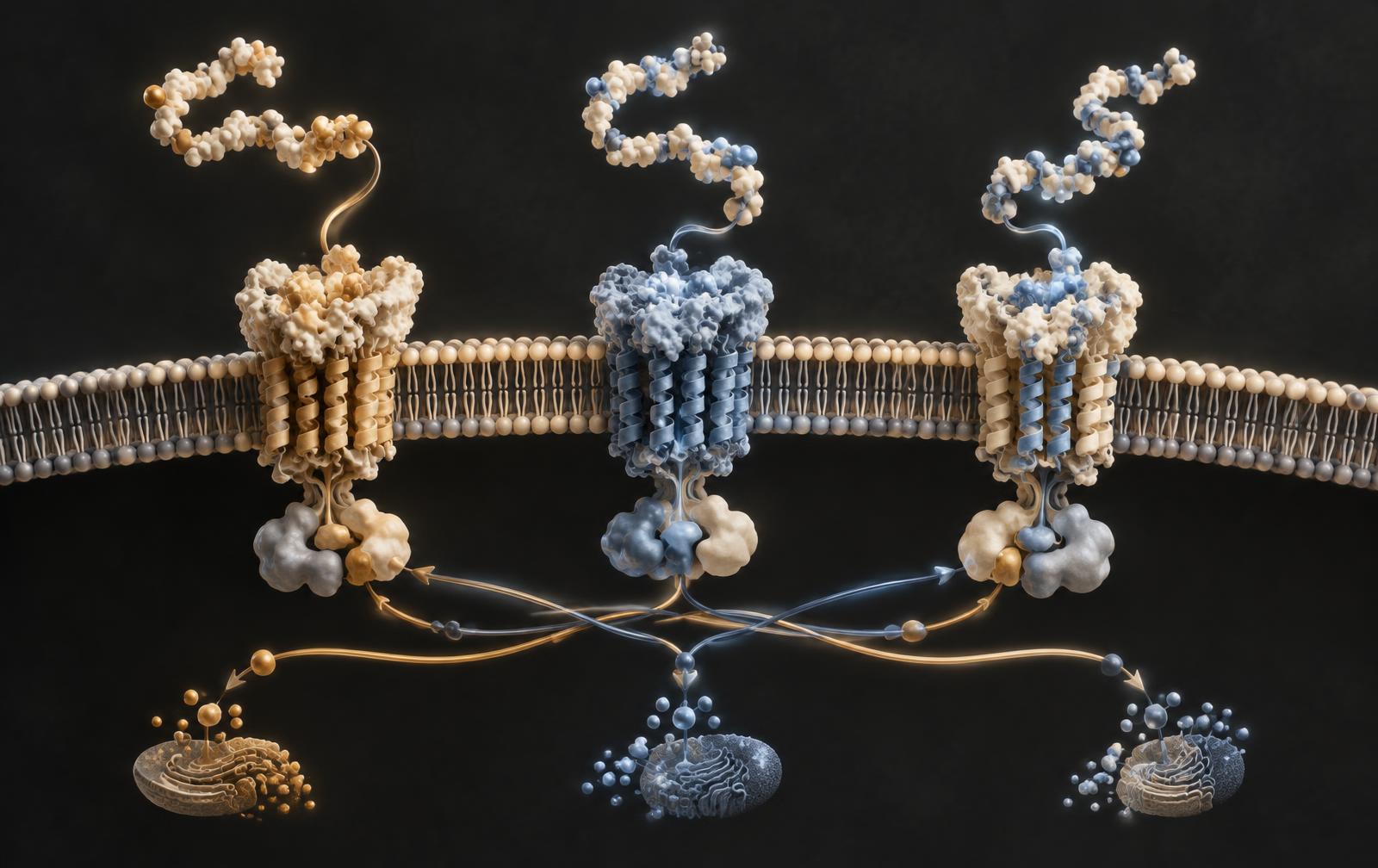
The incretin field has moved quickly enough that social media often compresses three very different scientific documents into a single ranking: semaglutide, tirzepatide, retatrutide. The sequence is real in one narrow sense. Semaglutide is a GLP-1 receptor agonist. Tirzepatide acts at both the GIP and GLP-1 receptors. Retatrutide is designed to act at GIP, GLP-1, and glucagon receptors. But receptor count is not a scoreboard.
One target: GLP-1
GLP-1 receptor agonism is the backbone of modern incretin therapy. The pathway affects glucose-dependent insulin secretion, glucagon suppression, gastric emptying, and central appetite signaling. Semaglutide's obesity and cardiovascular-outcomes trial programs created a large evidence base in defined populations, which is why it belongs in a different category from speculative research peptides or unapproved copies.[1]
Two targets: GIP plus GLP-1
Tirzepatide added GIP receptor agonism to GLP-1 receptor agonism and produced substantial results in type 2 diabetes and chronic weight-management trials.[2] The pharmacology is not merely 'semaglutide plus one.' The balance of activity, receptor potency, pharmacokinetics, and tolerability all matter. A dual agonist is a specifically engineered molecule, not a stack of two simpler drugs.
Three targets: GIP, GLP-1, and glucagon
Retatrutide adds glucagon receptor activity to the dual-incretin concept. That third target is scientifically interesting because glucagon participates in hepatic metabolism and energy balance. It is also the part that makes simplistic coverage most dangerous: glucagon biology is not reducible to 'fat burning,' and the clinical effect of adding it must be established in controlled trials.
Why cross-trial comparisons mislead
A common online move is to place trial percentages next to each other and announce a winner. That is not how serious trial interpretation works. Different studies enroll different populations, use different background therapies, last different lengths of time, and define endpoints differently. Even when the broad endpoint is body weight, the details can matter. Head-to-head trials are the cleaner way to compare compounds, and even then the comparison is only as generalizable as the population studied.
More targets can mean more possibility. It can also mean more complexity.
The careful reading is simple: semaglutide, tirzepatide, and retatrutide represent different stages in incretin-based metabolic research. They should be understood by mechanism, evidence, indication, regulatory status, and safety profile — not by a meme-friendly count of receptor targets.
Sources & Further Reading
The Half-Life Brief
Research worth reading. No hype.
Get evidence-focused breakdowns of peptide research, metabolic health, longevity, performance and emerging science.
Research summaries, not medical advice. Unsubscribe anytime.
Continue the research
Interested in exploring the research platform?
ORA Wellness Labs provides account-based access to its laboratory research-material platform. Half-Life Optimization is editorially independent; nothing in this article is a recommendation, endorsement, or medical advice.
Related research