The Evidence Check
Mechanistic evidence
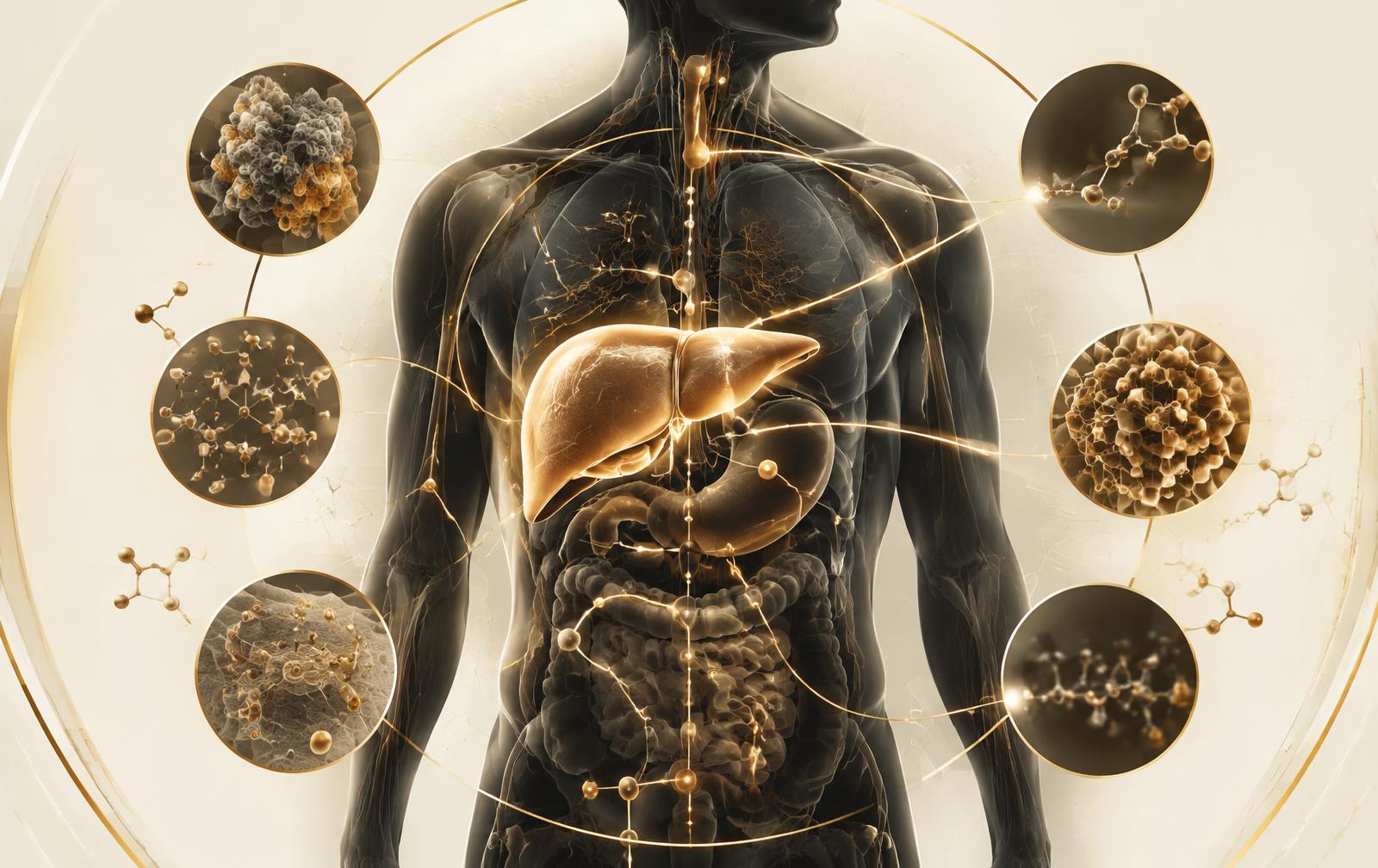
Visceral fat drains through portal circulation and is metabolically active in ways that differ from subcutaneous fat.
Animal evidence
Animal models support depot-specific biology but human imaging and epidemiology are central here.
Human evidence
Human studies link visceral adiposity with cardiometabolic risk markers more strongly than simple appearance can capture.
What remains unknown
Which interventions improve hard outcomes through visceral-fat reduction specifically must be evaluated trial by trial.
What the Evidence Says
Promising
Depot-specific fat biology helps explain why body composition is more than body weight.
Established
Visceral and subcutaneous fat are anatomically and biologically distinct.
Unknown
A smaller waist or lower weight does not automatically reveal which depot changed or what clinical risk changed.
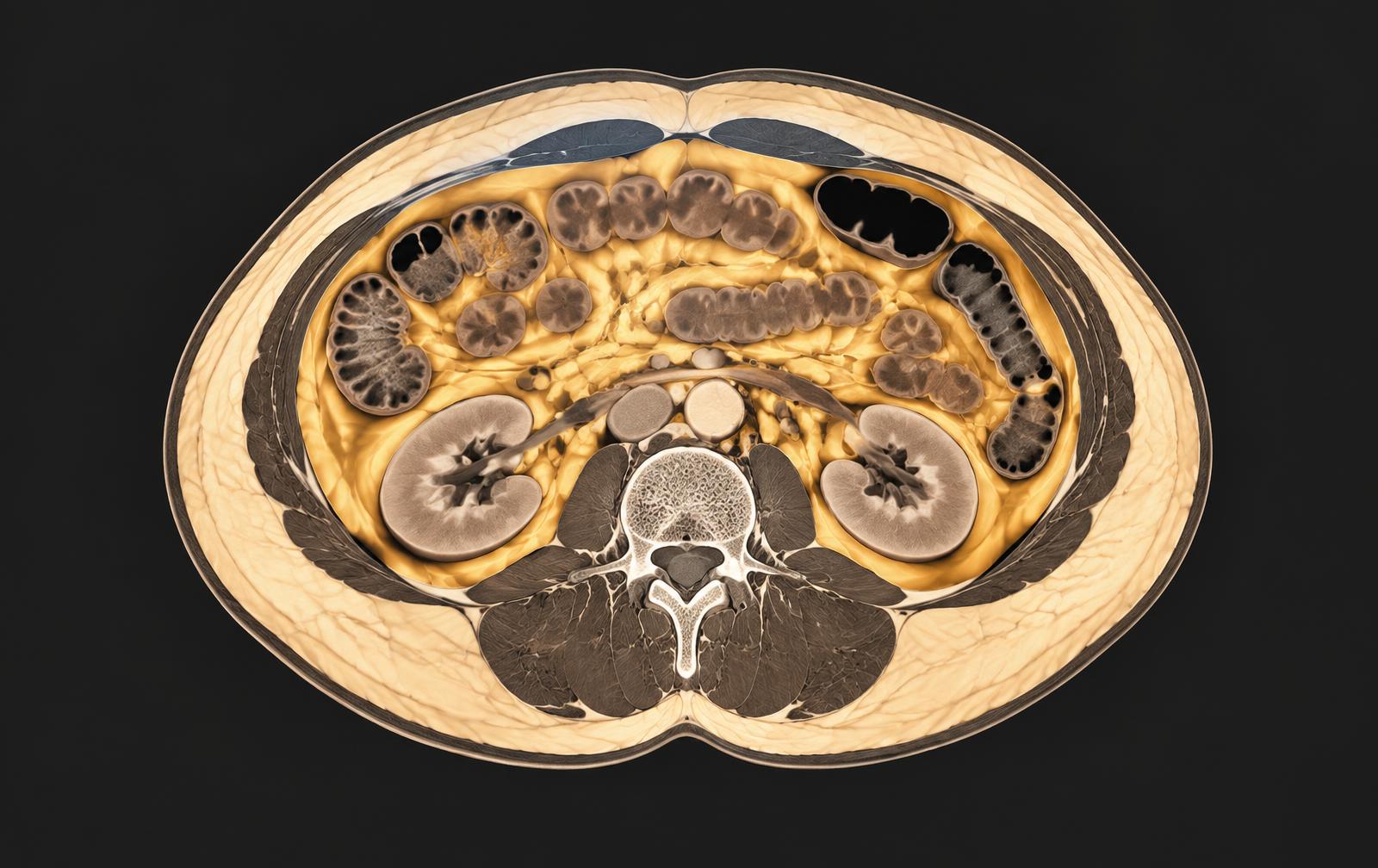
'Belly fat' sounds like a location. Visceral adipose tissue is a biology. It is the fat stored inside the abdominal cavity around organs, distinct from subcutaneous fat stored under the skin. Two people can have similar body weight and very different distributions of visceral and subcutaneous fat. That distribution matters because fat depots behave differently.
Two depots, two contexts
Subcutaneous fat sits between skin and muscle. Visceral fat sits deeper, around organs and near the portal circulation that connects the gut and liver. That anatomical difference helps explain why visceral adiposity has been associated with insulin resistance, dyslipidemia, fatty-liver disease, and other cardiometabolic risk markers.[1]
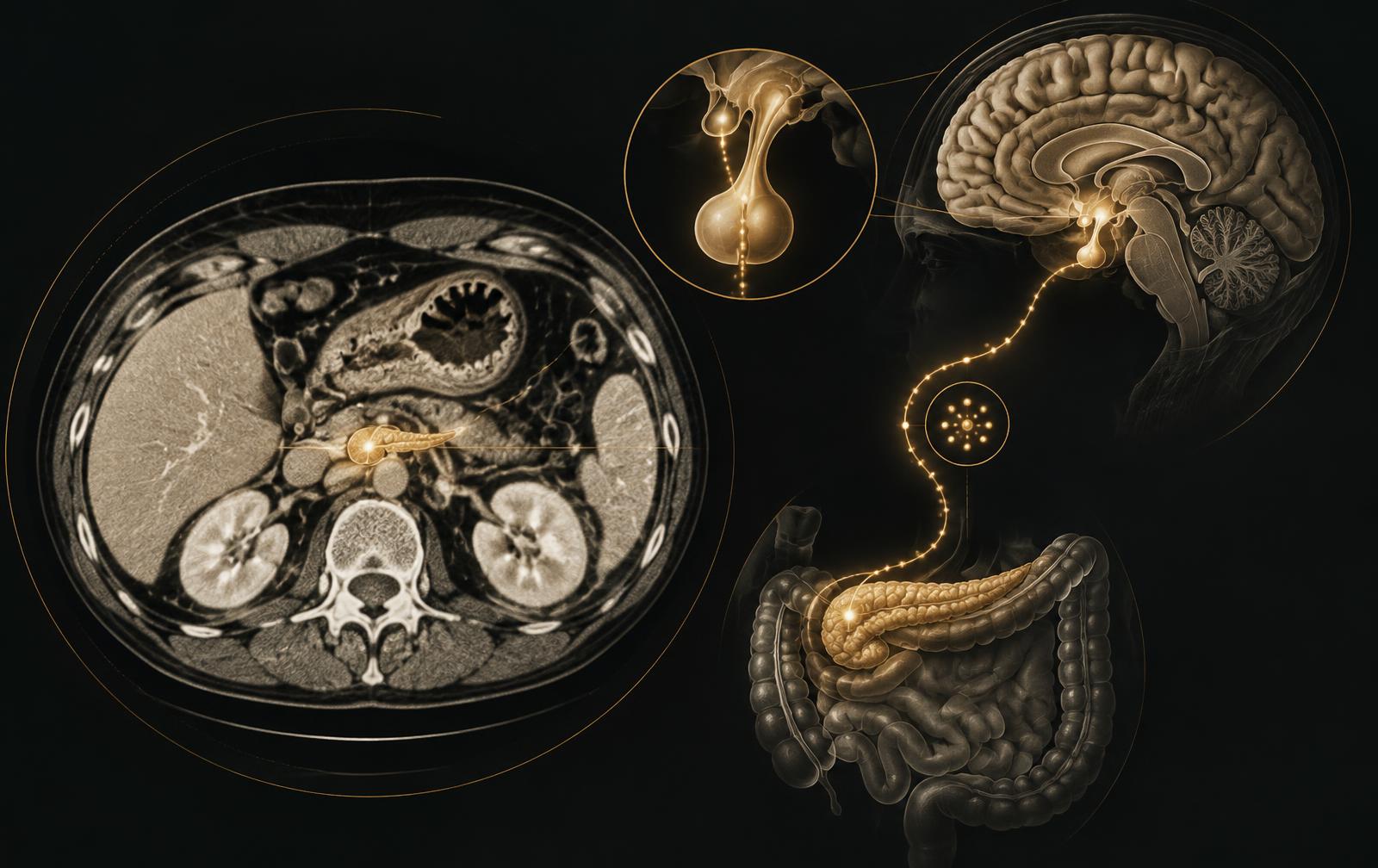
This does not mean subcutaneous fat is inert or that visceral fat is the only thing that matters. It means researchers measure them separately because they answer different questions. Imaging tools such as CT and MRI can estimate depot-specific fat far more precisely than a mirror, a scale, or a tape measure.
Why peptide and metabolic-drug studies care
Several metabolic therapies, including tesamorelin in its approved context and GLP-1/GIP programs in broader metabolic research, measure body composition rather than weight alone. Weight can fall because of fat mass, lean mass, water, or a mix of all three. Imaging-based endpoints let researchers ask a more specific question: which compartment changed?
What not to infer
No image, scale number, or online testimonial can prove that a specific compound reduced visceral fat in a clinically meaningful way. That requires defined measurement, a defined population, and a controlled study design. Visceral fat is too often used as a scientific-sounding phrase for ordinary appearance change. The actual science is more precise and more useful.
Body weight is a measurement. Body-fat distribution is a map.
Understanding the map is one reason metabolic research has become more sophisticated. It is also why Half-Life treats body-composition claims as claims that need methods, not just photos.
Sources & Further Reading
The Half-Life Brief
Research worth reading. No hype.
Get evidence-focused breakdowns of peptide research, metabolic health, longevity, performance and emerging science.
Research summaries, not medical advice. Unsubscribe anytime.
Continue the research
Interested in exploring the research platform?
ORA Wellness Labs provides account-based access to its laboratory research-material platform. Half-Life Optimization is editorially independent; nothing in this article is a recommendation, endorsement, or medical advice.
Related research