The Evidence Check
Mechanistic evidence
Tesamorelin is a growth-hormone-releasing hormone analog that stimulates pituitary growth-hormone release.
Animal evidence
Animal endocrinology supports the pathway but is not the key evidence layer for tesamorelin's approved use.
Human evidence
Controlled human studies support use in HIV-associated lipodystrophy to reduce excess visceral abdominal fat.
What remains unknown
Generalizing beyond studied populations, indications, and risk profiles is not justified without additional trials.
What the Evidence Says
Promising
Tesamorelin shows why peptide pharmacology can have real clinical evidence when studied properly.
Established
Its evidence is tied to specific clinical contexts, not general wellness or ordinary weight loss.
Unknown
Benefits and risks outside those contexts require separate evidence.
Tesamorelin is one of the clearest examples of why Half-Life separates peptide structure from peptide evidence. It is a peptide. It acts through a defined endocrine pathway. And unlike many research-market peptides, it has controlled human clinical data in a specific medical population. That does not make it a general-purpose body-composition tool. It makes it a case study in context.
What tesamorelin is
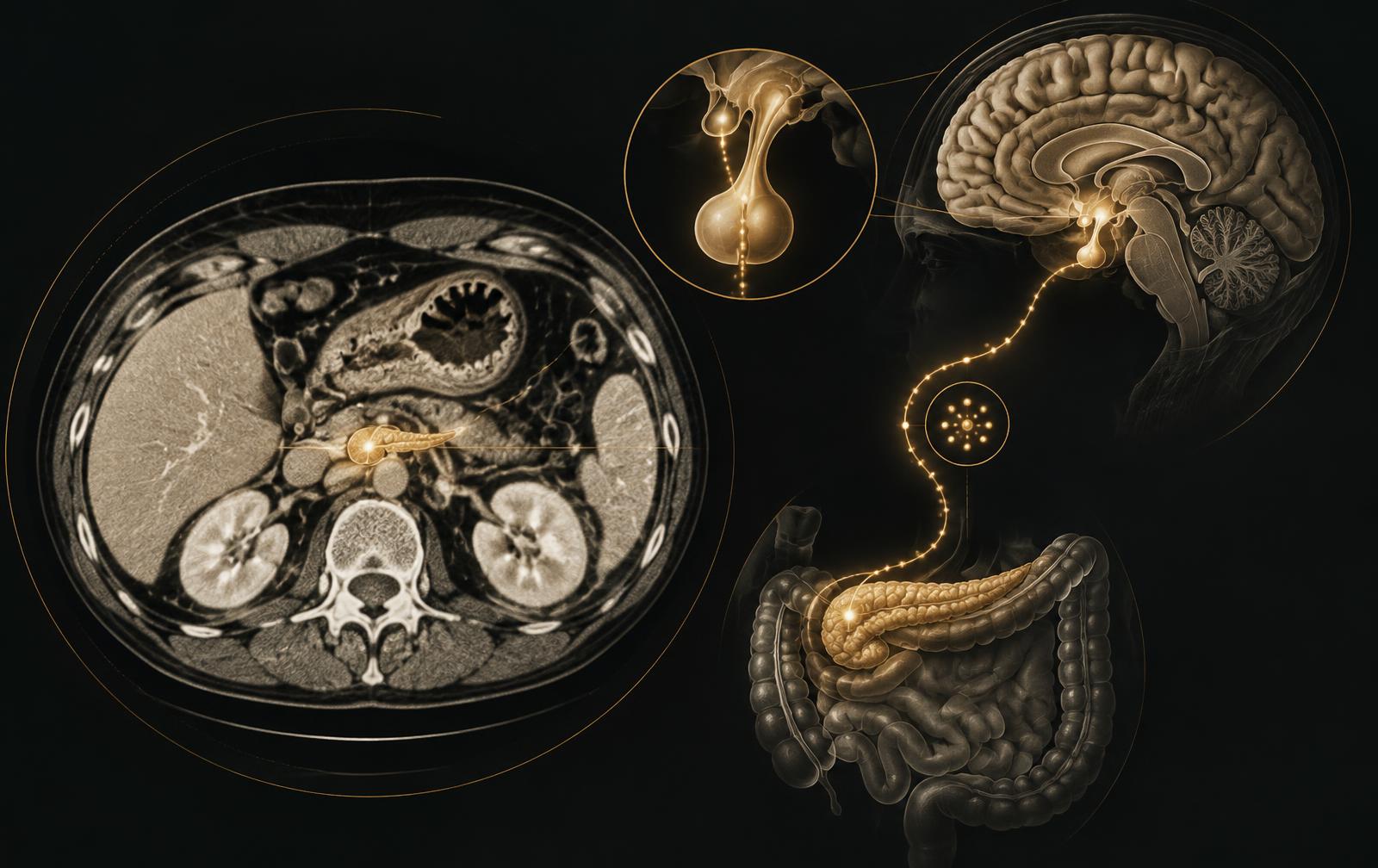
Tesamorelin is a synthetic analog of growth-hormone-releasing hormone, or GHRH. GHRH is an endogenous hypothalamic peptide that stimulates the anterior pituitary to release growth hormone. Growth hormone then acts through multiple tissues and partly through IGF-1 signaling. The clinical interest in tesamorelin centers on whether carefully increasing this axis can reduce excess visceral adipose tissue in a defined condition.[1]
The specific indication matters
Tesamorelin was studied and approved for reducing excess abdominal fat in adults with HIV-associated lipodystrophy. That population is not interchangeable with the general public. HIV-associated lipodystrophy has a specific medical history, body-fat distribution pattern, metabolic context, and treatment background. Evidence generated there should not be casually repackaged as evidence for ordinary weight loss.
Why visceral fat is the endpoint
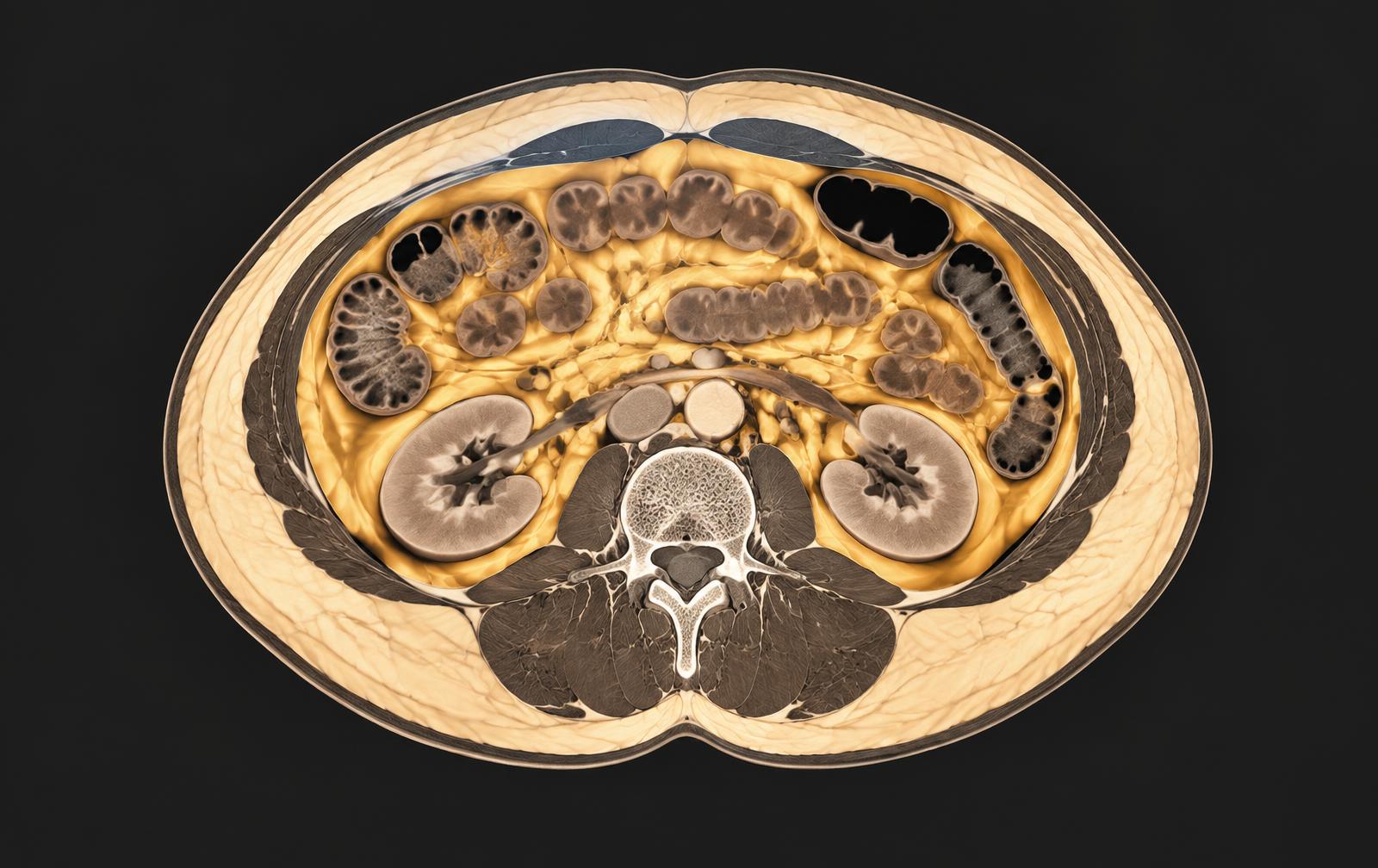
Visceral adipose tissue is fat stored inside the abdominal cavity around organs. It is biologically distinct from subcutaneous fat under the skin and is more closely linked to cardiometabolic risk markers. Tesamorelin studies used imaging-based measures of visceral fat, which is a stronger endpoint than visual before-and-after interpretation.
The limits of the evidence
The existence of human data does not mean the risk-benefit calculation is universal. Growth-hormone-axis interventions can affect glucose, IGF-1, edema, joint symptoms, and other variables. The correct question is always population-specific: who was studied, what endpoint changed, how large was the effect, what adverse events occurred, and what indication did regulators evaluate?
Real clinical data is powerful because it is specific.
Tesamorelin is not a cautionary tale against peptides. It is a cautionary tale against removing peptides from the context that made the evidence meaningful.
Sources & Further Reading
The Half-Life Brief
Research worth reading. No hype.
Get evidence-focused breakdowns of peptide research, metabolic health, longevity, performance and emerging science.
Research summaries, not medical advice. Unsubscribe anytime.
Continue the research
Interested in exploring the research platform?
ORA Wellness Labs provides account-based access to its laboratory research-material platform. Half-Life Optimization is editorially independent; nothing in this article is a recommendation, endorsement, or medical advice.
Related research