The Evidence Check
Mechanistic evidence
Peptides can bind receptors and alter downstream signaling, including GPCR, endocrine, and paracrine pathways.
Animal evidence
Animal models can show whether receptor engagement changes physiology in a living organism.
Human evidence
Human relevance depends on the specific receptor, compound, exposure, tissue, and endpoint.
What remains unknown
Binding a receptor does not reveal whether the net effect is beneficial, safe, or durable.
What the Evidence Says
Promising
Receptor biology explains why small peptides can have large biological effects.
Established
A receptor interaction is a mechanism, not a clinical outcome.
Unknown
Downstream effects vary by tissue, dose, timing, and disease state.
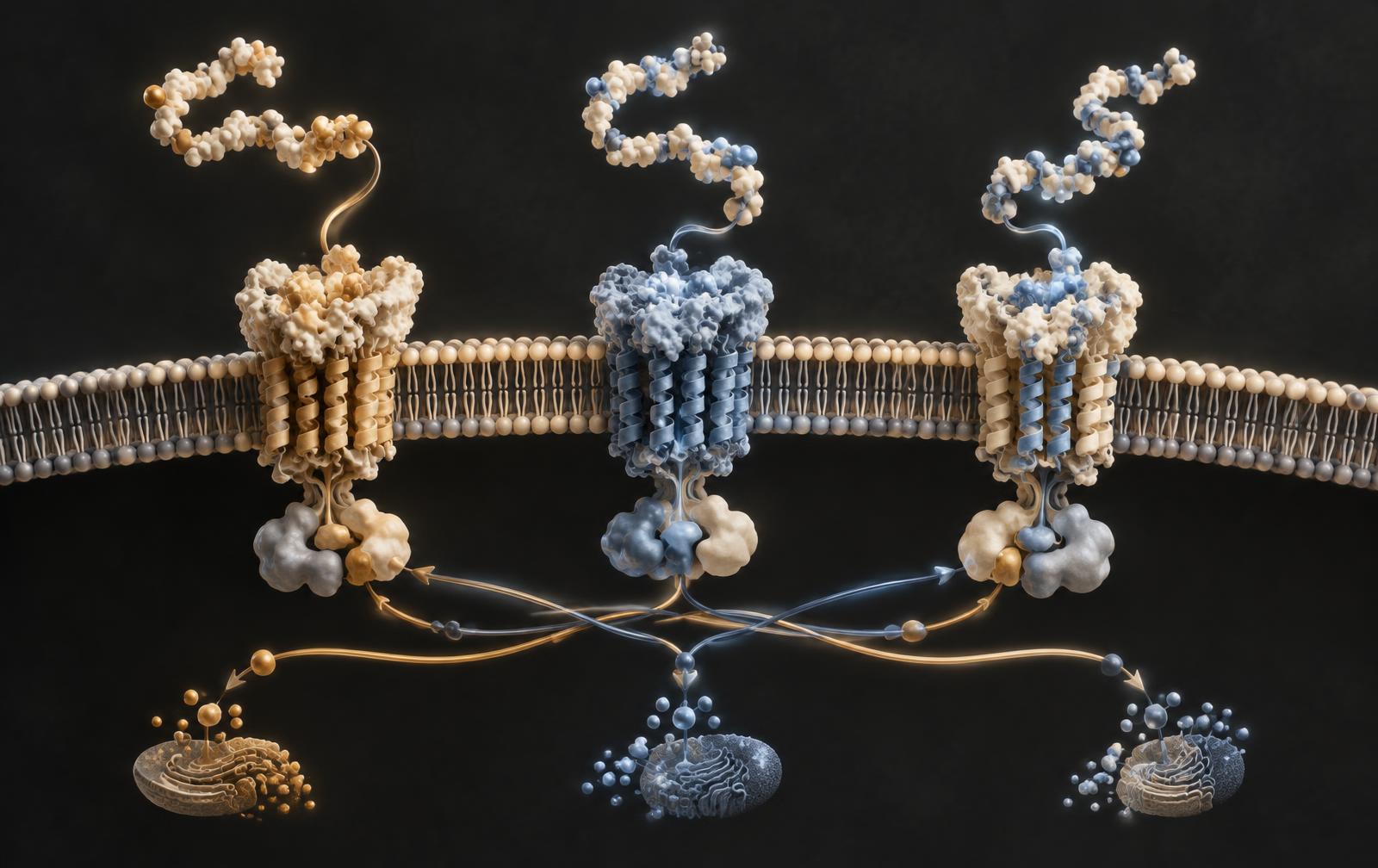
Peptides are small compared with proteins, but biology is built to hear small signals. Insulin, GLP-1, glucagon, oxytocin, and many other endogenous peptides work by interacting with receptors on or in cells. The receptor translates a molecular encounter into a change in cellular behavior.
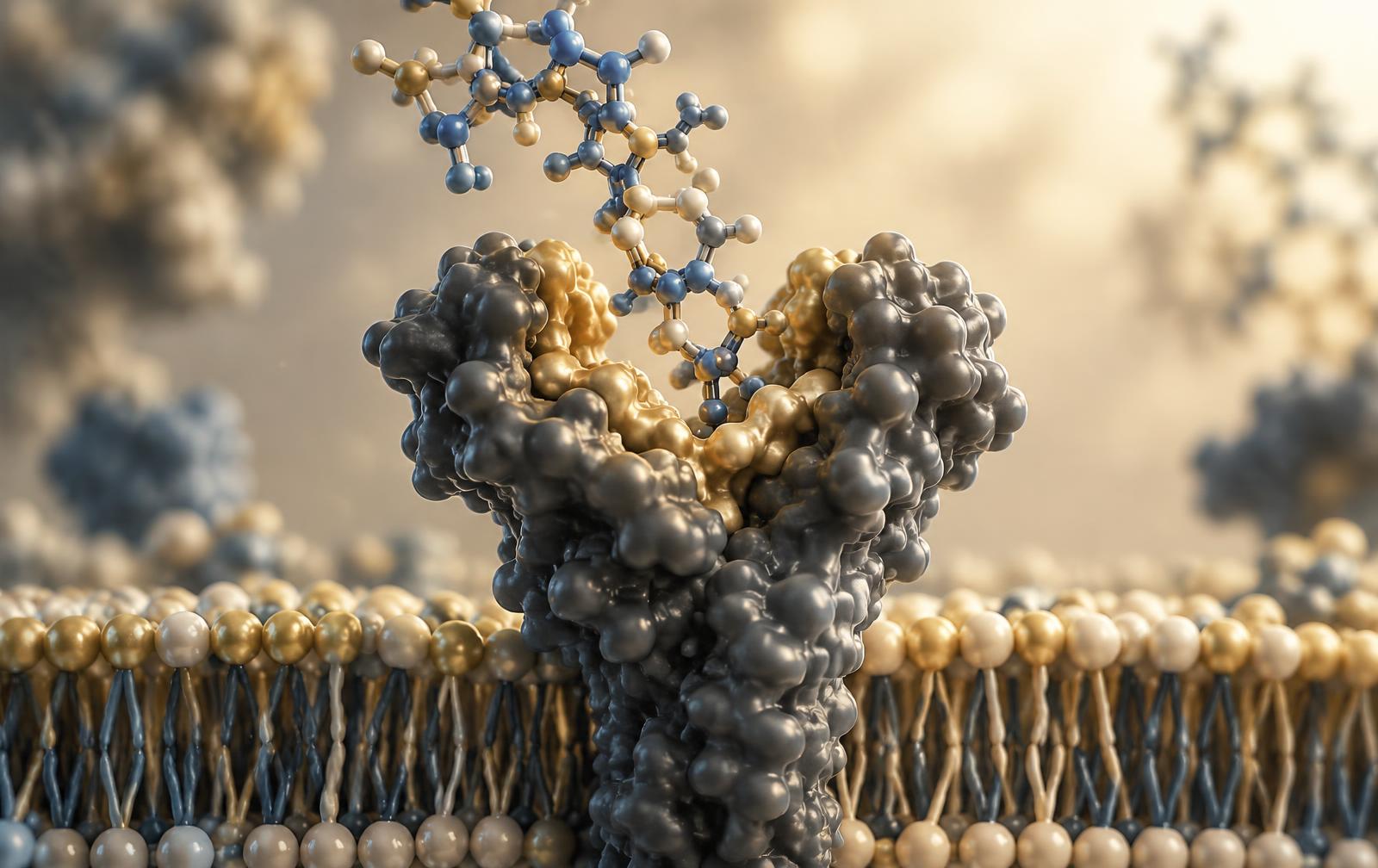
The lock-and-key analogy
The usual analogy is a key fitting a lock. It is useful and incomplete. Real receptors are dynamic proteins. A molecule can bind strongly or weakly, activate fully or partially, bias one downstream pathway over another, linger briefly or persist, and trigger receptor internalization or desensitization. Two molecules aimed at the same receptor can behave differently.
Why analogs exist
Endogenous peptides often have short half-lives because the body is designed to turn signals on and off. Drug developers modify peptide structures to change stability, receptor affinity, duration, and tissue exposure. That is how a short-lived native hormone can inspire a once-weekly drug. The modification is not cosmetic; it changes the pharmacology.
What receptor binding does not prove
Showing that a compound binds a receptor is a beginning. It does not prove that the compound reaches the receptor in humans, that the effect is beneficial, that the dose is safe, or that the outcome matters clinically. Those questions require pharmacokinetic, safety, and outcome studies.
A mechanism tells you where to look. It does not tell you what you will find.
Understanding receptors makes peptide science more exciting, not less. It also makes the claims easier to sort.
Sources & Further Reading
The Half-Life Brief
Research worth reading. No hype.
Get evidence-focused breakdowns of peptide research, metabolic health, longevity, performance and emerging science.
Research summaries, not medical advice. Unsubscribe anytime.
Continue the research
Interested in exploring the research platform?
ORA Wellness Labs provides account-based access to its laboratory research-material platform. Half-Life Optimization is editorially independent; nothing in this article is a recommendation, endorsement, or medical advice.
Related research